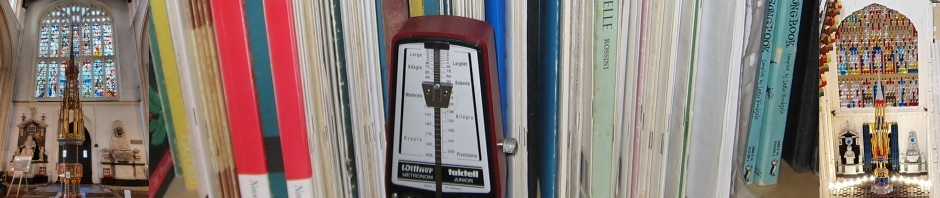
You know you’ve just sung the Sea Symphony when…

… you cannot see the ‘Following’ button on Twitter without hearing the end of the Scherzo.

Posted in category-defying | Tagged | Leave a comment

♥ Olga and Onegin are now friends

Wouldn’t the plot of Eugene Onegin work well as a series of status updates? We went to see it at the Royal Opera House.

This particular production was on its second outing here and had apparently been toned down a bit. The main conceit was that Tatyana and Onegin were looking retrospectively back on the action and so at some critical moments their roles were doubled by dancers. This didn’t really work for me – I just didn’t want an additional person on stage in the letter scene (for example) – although I think it might have worked in a production which didn’t attempt to be true to the time and place in which it was set.

Another area where literalism broke down was the treatment of the chorus, and I sensed an uncertainty about what to do with them, as they tended to be pushed towards the back of the stage. In the opening scene they laid hands on some of the principal characters – one could imagine their descendants throwing over the old order in the revolution a few decades later – but then they reappeared, still in rather drab monochrome, at Tatyana’s name-day ball. Surely the guests, even in the provinces, would have been rather more brightly dressed?

We had hoped to hear Hvorostovsky in the title role, but medical treatment necessitated his replacement by the Polish baritone Artur Ruciński, looking rather like a younger version of Lech Wałęsa. Somehow I couldn’t imagine a lovesick teenager falling for him – a really great singer would transcend this, but his performance, though adequate, wasn’t at that level. We were happy with Nicole Car (Tatyana) and Oksana Volkova (Olga); however Michael Fabiano as Lensky stole the show. We’ve enjoyed Ferruccio Furlanetto (Gremin) in the past but felt his intonation was a bit dodgy this time.

Semyon Bychkov – last heard conducting Shostakovich – did a good job in the pit. It’s pretty hard to mess up this opera, and it,was certainly worth the effort of the trip to London. There are reviews online, though not of the cast we heard.

Posted in going to operas | Tagged , , , , , , , , | Leave a comment

On the German border

I made two overseas trips in December, both near the border of Germany. First a short break in Aachen. The Cathedral there had a handsome organ, though its unique shape may give it some acoustic peculiarities (I didn’t hear the organ played so couldn’t verify this). One of the advertised concerts was going to be given by the choir of Trinity College Cambridge, who had also discovered that it’s not that far to go.

Christmas itself was spent near Colmar. Most of the musical content came from odd bits of France Musique on the car radio (their equivalent of the BBC Singers sounds very similar to them). I went to Midnight Mass – which really did start at midnight – and we sang a couple of familiar French carols and paid tribute to the area’s mixed history with a strangely-accented rendering of Stille Nacht.

Posted in going to services | Tagged , , | Leave a comment

2015 and 2016’s resolutions

As 2015 ebbs away, I look back on it as a year of progress rather than achievement. It couldn’t really match up to 2014 but there were some wishlist works that I got to perform: Poulenc’s Gloria (twice in a fortnight with different choirs!), Frank Martin’s Mass (or most of it), and Gowers’ Viri Galilæi. Other notable performances included Mahler 8 (albeit in a different place and with a different conductor from the ones I’d planned) and Verdi’s Requiem (for personal reasons). Venues included Worcester Cathedral, Canterbury Cathedral, York Minster, St George’s Windsor and a return after a long time to St Edmundsbury Cathedral. I’ve been happy with the standard of my own performance in all of these. On the concert and opera-going front it was rather quiet, the highlight being Igor Levit at the Wigmore Hall.

I started doing occasional solos in the church choir (and have done several during the year) as well as a couple with the Cathedral Chamber Choir. Against this must be set the possible loss of Priory Voices – I sang a weekend with them and saved dates of a couple of weekends in 2016, but that wasn’t enough to keep me on the list.

Musically speaking, 2016 is going to be dominated by participating in the Three Choirs Festival in Gloucester. I’d been keen to take part in this at some point, and for various reasons this seemed obviously the right year to do it. It will mean sacrificing some regular engagements such as the Erleigh Cantors in July. It will mean an awful lot of new notes, strenuous physical demands and a great deal of travelling to and fro. Watch this space.

Other planned singing includes weekends in Wells (very soon), Cambridge, and, erm, Gloucester, and a tour in Lichfield, as well as my first encounters with the Sea Symphony and Belshazzar’s Feast. Bristol Choral Society gains a new musical director, though I don’t think I’ll get to sing in a concert they conduct until the end of the year. Around me there are changes as at least two Bath choirs will also change their MD.

Posted in choirs | Tagged , , , , | Leave a comment

BCS … with bling

I missed Bristol Choral Society’s Messiah last year, so my memory needed a bit of refreshing this time. Our orchestra was the Bristol Ensemble, which meant modern pitch, and the high notes went with a bit more zing. We had a lot of competing Messiahs (I knew of three performances in Bath and another one in Bristol in the month before ours), but there were plenty to perform to, both at the Mini Messiah family concert, and the main performance in the evening.

It was a slightly poignant occasion, as it was the last performance under our current Musical Director. When singing from memory it is such a help to have your entries clearly brought in with a glance in your direction, and he is able to do this even for simultaneous entries for sopranos and altos, who stand at opposite ends of the choir for this work!

However, there was some light relief as our jewellery rule was relaxed and we were encouraged to wear ‘a splash of red’ somewhere on our person. Normally we can’t wear anything which might reflect the light, which rules out just about all the jewellery I own. (I wear a pair of earrings with dark stones, and for Requiems a string of antique jet beads.) So out came the crocheted spherical earrings.

I’ll end with a couple of thoughts. The audience of course stood up for the Hallelujah Chorus, and something about the way they always do this in a rather ragged way on cue makes me think of the ‘teddy bear toss’ at Christmas ice hockey matches. And we were told that ‘His yoke is easy’ (which one conductor always called ‘His yoke is blooming difficult’) is the hardest chorus in the piece. Is it? I don’t think I find any chorus harder than all the others, though there are some which are definitely easier than most. Or are the difficulties not to be found in the soprano line?

Posted in singing in concerts | Tagged , , , | Leave a comment

Advent and Christmas 2015

Our two carol services, separated by a fortnight, brought some new pieces for me to sing and some welcome reprises. Advent brought Anthony Piccolo’s I Look from Afar, quite a demanding setting of this text, but worthwhile. And my singing year ended as it began, with Poulenc’s Videntes Stellam. The Christmas carol service also included Warlock’s Benedicamus Domino, which I have heard many times on the 9 Lessons broadcast but as it happens never sung myself.

Each service also included a piece by James MacMillan: O Radiant Dawn and A New Song, both pieces I was keen to become a bit more familiar with.

One other event this month was that my husband went to hear Arcadi Volodos give a recital including Schubert’s D960 B flat sonata at the Barbican in London. As well as the performance he was impressed by the number of well-behaved children in the audience, some of them surprisingly young.

Posted in going to concerts, singing at services | Tagged , , , , , , , | Leave a comment

Windows for Finzi

A set of 8 stained-glass windows by Tom Denny commemorating Gerald Finzi will be installed in Gloucester Cathedral next June. I was given a flyer at choir practice, but I think this has not been widely publicised and deserves to be.

There is more information and a picture here and donations towards the cost are welcome.

Finzi was something of a cult composer in my musical circle when I was a student; I sang several of his pieces then, and others since. Of them my favourite is the Magnificat – you can’t listen to his setting of ‘He hath put down’ accompanied on a Cathedral organ and dismiss Finzi as one of the cow-pat school.

Posted in category-defying | Tagged , | Leave a comment

Schön and Schoenberg

The cinecasts from the Metropolitan Opera have moved beyond the safer options into more daring repertoire, and I made sure to catch the transmission of their new production of Lulu. Lothar Koenigs from WNO replaced James Levine as conductor.

The defining feature of this production is the projection of continually changing line drawings as a backdrop, something which I saw in an abstract form in Berg’s other opera a few years ago. Mostly these were apparently depicting Lulu herself, which allowed for the composer’s instructions to be respected during the palindromic interlude in the middle of Act 2. Sometimes they were not figurative at all. But occasionally images of real people appeared: Berg himself (alongside the quote from Wozzeck in Act 1), Schoenberg and I think I spotted Mahler and Webern too.

Schoenberg seemed especially appropriate since I can’t get rid of the idea that at some level this opera is about Berg’s relationship with his former teacher. Lulu is discovered in adolescence by Schön who becomes a substitute father, brings her up, and expects to control her completely, but the relationship is fatally damaged because she takes too much of an interest in others. The parallels seem pretty clear, and I’d bring in two other pieces of evidence. The emblematic object in the opera is the portrait which is painted of Lulu; in real life Schoenberg cut out the middleman and painted Berg’s portrait himself. And Lulu’s aria in Act 2 has that most Bergian of attributes, its own dedication, which is to Webern; is this because it is somehow about the process of musical composition? Schön’s name (changed from Schöning in the original plays) differs from Schoenberg’s only by Berg’s own name.

It was a good performance with Marlis Petersen excellent in the title role. The camerawork is rather different from the Covent Garden cinecasts with less looking down the singers’ tonsils. But I made a bolt for the ice cream stall when the singers were interviewed as they came off stage, as I like to keep the dramatic illusion intact.

It’s a joint production with ENO so there should be a chance soon to catch it in London. [I did]

Posted in going to operas | Tagged , , , , | Leave a comment

being dropped

I pencilled in a couple of Cathedral weekends in 2016 with a choir I do such things with, only to find that I’m not invited on them. I won’t discuss the reasons in detail here (they are to do with my perceived unavailability to sing) but rather the gap that the absence of this choir creates for me. It’s not just the performances that I will miss, but the people. While they are not such close friends that I have contact with them outside the choir – apart from social media chit-chat with some – I do count a number of them among my wider circle of friends and would be sorry not to meet them again.

Choirs may have the benefit of allowing you to join a social group, but there is the downside of losing that group if you leave the choir. Bristol Choral Society has one remedy for this which is organised walks several times a year, open to both present and past members (the latter form a large part of those who take part). It may not be the end for me and this other choir just yet; I’m still available to fill gaps, and as one of the weekends in 2016 is local I intend to be a part of the congregation at at least one service.

[July 2016: looks as if it may not be the end for me after all. As the situation with this choir has changed quite a lot I have deleted some comments.]

Posted in choirs | Tagged | 3 Comments

Igor Levit at the Wigmore Hall

I was in London and this looked the most interesting concert. Others in the family had heard Igor Levit at the Proms recently and I got one of the last few tickets for the recital of three works including variations.

Heard of Georg Muffat? I hadn’t, and had assumed he was contemporary, but he turns out to be late 17th century! We heard his most famous piece, a Passacaglia in G minor. It’s a striking piece, though contrary to my usual preference for hearing such repertoire on the piano, I found myself missing the sound of the harpsichord.

Shostakovich’s second piano sonata was also unknown to me. Very much in the mode of some of the string quartets, and often sparely written, it explores a different world from the symphonies which are my customary stomping ground when it comes to Shostakovich. This performance brought out both the spareness and the dramatic gestures.

Much the same could be said of the Diabelli Variations which formed the second half. We had both stillness and extravagance, with carefully timed pauses between the variations (the art of the expressive silence seems to be a rare one these days, with many performers just crashing on). I heard no mistakes at all – no wonder it was rapturously received.

Reviews:

Posted in going to concerts | Tagged , , , , | Leave a comment

remembering at All Souls’ tide

It’s the season of All Souls (I sang Fauré’s Requiem at a service), and sadly my thoughts turn to several people whom I got to know through music who have died in the last year. I suppose this will happen more often from now on. I’ll commemorate them and their part in my musical life here (N.B. this does not mean I have forgotten the others who have died recently whom I met in other ways).

  • William Wingate. A long standing member of the Cathedral Chamber Choir, who was a capable choral conductor. I recall one occasion where our organist failed to turn up for a Sunday Cathedral evensong (!); our conductor played the organ, and William stepped up to conduct, including Howells’ Westminster Canticles. It’s hoped to have a memorial concert for him in the New Year.
  • Janet McMullin. I was sorry not to be able to make it to her funeral a few days ago. She was part of a group of people who regularly sang concerts and services together when we were students. With them I encountered many great anthems and canticles for the first time, and some are indelibly associated with Janet because she sang the solos in them. I have some of the Oxford Camerata Naxos recordings of Tudor repertoire on which she sang.
  • Ronald Frost. Organist of St Ann’s Manchester when I sang there. He seemed quite tireless and gave an organ recital there almost every week. He had the rare quality of being completely fair in his allocation of solos, giving everyone who could do one something appropriate to their ability. He and William Wingate had a rather similar taste in church music. I’ll end with a selection of some of his bons mots in rehearsal:
    • Don’t dawdle on the little carpet-slipper words
    • It’s very important in this piece to know who your friends are
    • We don’t have Christmas-tide any more; it’s Rutter-tide
    • You sound like an inebriated lamp-post
    • It’s four in a bar; you sound as if four of you have been in a bar!
    • In music, never own up to having made a mistake
    • I listen to evensong broadcasts every week and no one sings psalms as well as you. However…
    • The composer of this drank himself to death, you know
    • I’m clicking away here like a demented budgie
    • You sound like a Methodist women’s … no, I’d better not go on!
    • I shall commit murder if anyone breathes in that bar
    • If one of my theory students gave me harmony like this, I would mark it wrong
    • [when the choir was paid by a shopping centre to sing carols there] Don’t think of the notes; think of the banknotes!
Posted in category-defying | Tagged , , , , , , | Leave a comment

Frank Martin in St Edmundsbury

It is a long time since I’ve been to St Edmundsbury Cathedral. In the meantime it’s sprouted a tower, accommodated a visitor centre and joined the trend for installing lifts (rather better integrated with the building than York Minster’s). It is an attractive building with a supportive acoustic in the quire, some beautiful wrought iron and a gallery in the North transept from which we sang Bairstow’s Let all Mortal Flesh.

The Erleigh Cantors came for the weekend with a stack of music including something very high on my list of wanted works: Frank Martin’s Mass for double choir, from which we sang all but the Kyrie and Credo. It is a famously hard piece (I suspect many Cathedrals don’t have it in their repertoire). Part of the difficulty is that there is no other well-known music by this composer, so no familiar idiom to adjust to. Having said that, a couple of bars in the Sanctus really remind me of the same movement in Vaughan Williams’ Mass in G minor, although the settings were written in the same year and Martin’s was kept private for decades. Morphic resonance, anyone? Anyway, I have now learnt those movements so thoroughly that I could easily sing them again at short notice.

I associate this Cathedral with Mozart. Last time I came was to sing the Solemn Vespers, this time the Te Deum K141. As with the early Mozart masses where the Dona Nobis Pacem is as long as the rest of the work put together, the last few words take up a large proportion of the piece. Was this Salzburg Cathedral’s liturgical requirement? We paired it with another piece new to me, Peter Philips’ setting of the Jubilate Deo, a double-choir piece in the Venetian manner. Both of these (and Howells’ Coll Reg canticles, which we sang in the afternoon) have to be handled carefully, because they play on an awkward area where my voice changes.

We also sang Rutter’s Cantate Domino (new to me), Bob Chilcott’s Hail, Star of the Sea, the Francis Jackson Responses, William Child’s Evening Canticles in B flat, and an extract from Elijah (good practice for the 3 Choirs next summer).

Bury St Edmunds is a quiet sort of place. Especially on Sundays – neither the Cathedral refectory nor the newsagent nearby were open – but even on Saturday night our meal together ended after the main course at 8.30 p.m. By that time Priory Voices (meeting that weekend in Durham) probably hadn’t even finished pre-prandial drinks in the pub!

Posted in singing at services | Tagged , , , , , , , , , , , , , | Leave a comment