Abbey interregnum

It’s now time to quickly cover some services I sang at Bath Abbey during the gap between the departure of Dewi and the arrival of Adam. (Much of the Abbey Chamber Choir’s 4-year existence to date, including one period of 18 months, has been this sort of interregnum.) Actually, Adam did conduct a number of services and rehearsals during this time, when Exeter Cathedral could spare him. And as I’ve already said, I missed the big event when the St Peter’s Singers made their return visit.

As it was a time when numbers were also low – I myself sang only three services – and conductors of services chopped and changed (as did the details of services we sang), there were some pieces that made repeated appearances in recent months: Palestrina’s Missa Brevis, Elgar’s O Salutaris Hostia, and Bairstow’s Jesu, the very thought of Thee. However there was one new anthem for me, by a composer I’d never sung before: Amy Beach’s Peace I leave with you.

The autumn marks a fresh start, and the possibility of some welcome changes inspired by what happens over in Exeter. See my September post for an explanation!

Posted in singing at services | Tagged , , , , , , | Leave a comment

an Olympic Sanctus

I rejoined the South Cotswold Big Sing Group in Gloucester Cathedral to sing a work that had been on my hitlist for a while, Berlioz’ Te Deum. I’d heard a lot about performances of this piece that others had sung in (one other singer proudly boasted it was her 10th!), but hadn’t even heard performances or recordings of it that I recall. Given the forces required this is not so surprising.

I went to a workshop and thereafter the choir accumulated more and more singers until performance day. (There was no equivalent of the objectionable singer who appeared in an equivalent concert a few years ago and found fault with almost everyone around him.)

This is grand, ceremonial music, something which was understood by the organisers of the 2000 Olympic opening ceremony in Sydney when an extract accompanied the final transfer of the flame at the climax of the ceremony. But just before that is the quieter, intimate setting of the words Sanctum quoque Paraclitum Spiritum for lower voices alone; the same effect simply couldn’t be achieved with upper voices at the same pitch. Surely Berlioz was one of the great composers for the ATB combination? (I suppose Byrd and Rachmaninov might have a word to say about this too.) And there are also some very exposed and awkward quiet entries.

It wasn’t the only piece on the programme. The tenors and basses sang the Alto Rhapsody in accompaniment to Dame Sarah Connolly and we sops and altos had Fauré’s and Messager’s Messe des pêcheurs de Villerville, a work written as a ‘benefit’ for the fishermen of the place where they’d gone on holiday. I was expecting this to be new to me, but on singing through I immediately realised that Fauré had redeployed some parts of it in his later Messe Basse, in some cases setting them to different texts. Messager’s contribution was a couple of movements in a rather more operatically-inflected though not conflicting style.

I had not sung the Messe Basse since I was at school, but it remains firmly engraved in my memory. We used to sing it at confirmation services along with Mozart’s Ave Verum and in my register of pieces that I’ve sung it is the first item.

Posted in singing in concerts | Tagged , , , , , , , | Leave a comment

Quadruple booked

Saturday 28th June was a day when I was wanted everywhere. There was a Berlioz Te Deum rehearsal in Gloucester; a wedding at church; the return visit of St Peter’s Singers of Exeter to join Bath Abbey Chamber Choir in an evensong with Howells and Britten; and Bristol Choral Society’s Missa Solemnis. Strictly speaking, this could have just been a triple booking, as I think it was just possible to do both the wedding and the evensong at Bath Abbey. I didn’t do either though, or the Berlioz, as the Missa Solemnis is a categorical imperative.

One question I am often asked is why I don’t sing in a large choir in Bath. I normally reply with a question of my own: when was the Missa Solemnis last performed here? (The answer is 1982, and this doesn’t look like changing any time soon.) I have to seize any opportunity that comes my way, and even having sung the work twice I feel I’ve only just scratched the surface. One aspect I particularly noticed this time round is how rhythmically complex it can be, much more so than the 9th Symphony finale.

It was a good way to end singing with Bristol Choral (at least for a while); rehearsal night clashes gave me a difficult decision for the forthcoming season.

Posted in singing in concerts | Tagged , , , | Leave a comment

a service for PSOs

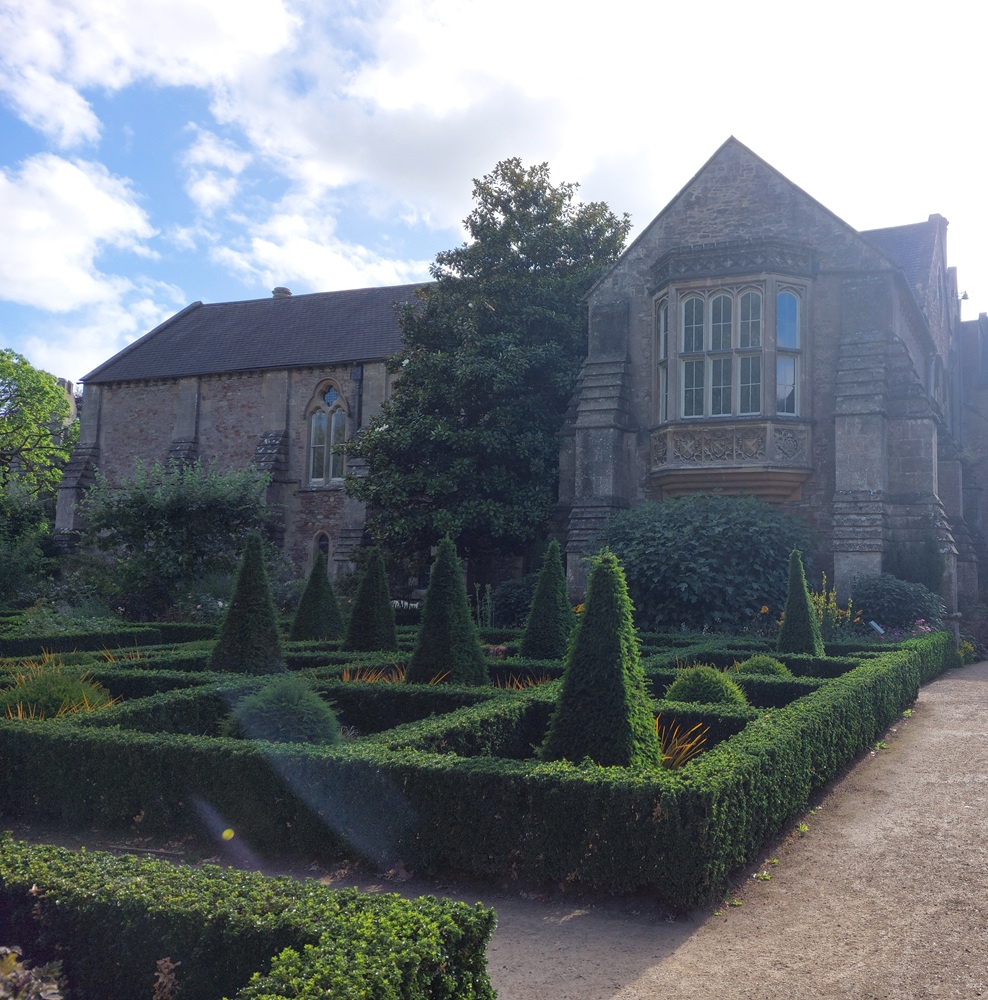
a hard-earned perk: the Bishop's Palace garden, Wells

a hard-earned perk: the Bishop’s Palace garden, Wells

PSO in this context stands for ‘Parish Safeguarding Officer’, a job I’ve been doing at my church for four years. This year Bath & Wells, for the first time, organised social events specifically for us (some other Dioceses have been doing this for years) and a garden party at the Bishop’s Palace was preceded by Evensong in the Cathedral, which was for the feast day of St John the Baptist.

I hadn’t heard the Cathedral choir for some years and they sounded in good form. The music was all by Naylor: his canticles in A and Vox dicentis, which sounds more preposterous every time I hear or sing it.

The main organ was not used (at the end of the service an accomplished pupil at the Cathedral School played some Mozart on the piano). I’m not sure whether this was just to give the organist an evening off or because the organ is on the verge of collapse. [update October 2025: its state is now so parlous that an urgent refurbishment is going to start in January 2026]

Posted in going to services | Tagged , , | Leave a comment

a 35th anniversary concert

The Erleigh Cantors were deprived of any sort of 30th anniversary concert because it would have fallen in 2020. Nevertheless, an anthem was commissioned from Andrew Millington, and the 35th anniversary was marked in the same way with a new anthem by him, I sing the almighty power of God. The composer and his wife came to hear our premiere of it at a concert in St Peter’s Earley, and some of us enjoyed meeting them informally while we consumed our own refreshments beforehand in the church hall.

This anthem has an optional trumpet part and several other pieces in the concert made use of our trumpeter, Mark Kesel. We revisited ones we’d done over the years, including Vaughan Williams’ wonderful Lord, Thou has been our refuge, Sidney Campbell’s Sing we merrily and Richard Shephard’s Ye Choirs of new Jerusalem. A recording of us singing part of this last, made when the choir was half as old as it is now, is still on YouTube!

Back when I was a student there was a period when I couldn’t move for singing Lobet den Herrn: as well as the previously mentioned Hungarian tour, I sang it within a few months in a complete performance of Bach’s motets by the Cambridge Chamber Group and in Truro Cathedral on an Exon Singers tour. This year it happened again, as I quickly had to override Gloucester Choral Society’s interpretation with the Erleigh Cantors one and adjust to singing Lobet with fewer performers. Parry’s I was glad was another Transylvania repeat, and as it was a celebration concert we sang Zadok the Priest.

For a gentler contrasting mood we did a Byrd set: Sing joyfully, Justorum animae and the piece I once waited so long to sing again, Lætentur cœli. The concert was held over from the usual May till June (late Easter made it hard to schedule rehearsals) and I was double-booked, turning down a chance for solos in a Gibbons-themed evensong Service in Ross, but not as over-committed on the day later in the month I’ll write about shortly.

Posted in singing in concerts | Tagged , , , , , , , , , | Leave a comment

the Transylvania programme

Gloucester Choral Society sang the same programme everywhere on our choir tour of Transylvania. Three blocks of choral music interspersed with organ pieces. (Except that in the castle we gave a cut-down unaccompanied programme twice with different singers each time.)

What is it about Stanford’s Coelos ascendit hodie and foreign choir tours? Years ago, some people I knew sang at an audience with Pope John Paul II and chose the very end of this piece to perform for him. We did it on Bristol Choral Society’s Latvia tour (spending a considerable amount of time teaching it to the choir) and it turned up on both this Gloucester Choral tour and the last one, rather more seasonally as they were in Ascensiontide.

Ascension, Sinaia Monastery

Another piece which I associate with choir tours in these parts is Bach’s motet Lobet den Herrn. We took it on tour to Hungary with my college choir, the strangest performance being given to some pleased but bewildered holidaymakers in a hotel TV lounge by Lake Balaton. This time it formed the single longest piece on our programme. One of the difficulties with performing Lobet to people who don’t know it is stopping premature applause before the final Alleluia – not a problem JSB would have had in church.

There were no pieces on this tour that were totally new to me. We started with a group of Tudor English anthems, then a whistle-stop tour round Europe with Locus iste, Brahms’ Geistliches Lied, Grieg’s Ave maris stella, Bogoroditse Dyevo by Rachmaninov and ending with the Bach. Our closing set was the Stanford, Parry’s My soul there is a country and ending with a couple of ‘bangers’ in the shape of his I was glad and the Hallelujah Chorus.

Posted in singing in concerts | Tagged , , , , , , , , , , , , , | Leave a comment

Gloucester Choral Society plays Transylvania

It’s a remarkable choir that persuades dozens of its members (and hangers-on) to spend over three days travelling by train from one end of Europe to the other to go on their choir tour. But many of us on the tour did just that, stopping in Paris, Ulm and Budapest and joined in Braşov by others who had travelled by air.

An Art Nouveau piano in a peacock cabinet, Pelișor Castle, Sinaia

An Art Nouveau piano in a peacock cabinet, Pelișor Castle, Sinaia

We performed in four places: Bran Castle, the fortified church at Honigberg/Hărman, the Church on the Hill in Sigişoara and the Black Church in Braşov itself. All the churches were Lutheran ones with much history behind them, and with organs that made accompanied pieces and solo organ items possible.

The most memorable performance was at Honigberg, where we were given an introductory talk about the church and a chance to explore it and the fortified precinct surrounding it. The audience started to arrive an hour before the concert and entirely filled the building. Our encore (a folksong arrangement) brought them to their feet applauding as soon as they heard the opening line.

There was also time for exploration without performing; such as contrasting castles at Sinaia and impromptu games of chess in the hotel lobby (involving one Vlad who claimed to have played Karpov, and some very large drinks).

I’ll describe our concert programme in the next post.

Posted in singing in concerts | Tagged , , , , | Leave a comment

Bookending with Bach

The centrepiece of Gloucester Choral Society’s final concert of the season was Rheinberger’s Mass in E flat for double choir. I’d actually previously sung this with two other choirs, the Erleigh Cantors (alongside another current GCS member) and Priory Voices. Although as these had all been liturgical performances I’d never sung the Creed, and I think I’d only done the Kyrie once before, so there were some dots to master. Rheinberger was a prolific composer of church music, but I believe this is his only Mass for double choir.

Bach motets seem to be very much in vogue at the moment and the concert was bookended with two: Lobet den Herrn and Der Geist hilft. I’ve sung both quite recently so they slotted into place nicely.

This left time for a couple of pieces that were really new to me. Russell Hepplewhite’s piece Leaving sets words by Pam Ayres (rather more poignant than the flippant verse I remember from years back). It was not very difficult to learn but still distinctive with plenty of rhythmic and melodic interest. The composer came along to hear our performance.

And then there were two of Parry’s Songs of Farewell: the familiar My soul there is a country and the shorter I know my soul hath power to know all things which I’d never come across before.

That ended Gloucester Choral Society’s concert season in Gloucester, but not the entire season, as the next post will make clear.

Posted in Uncategorized | Tagged , , , , , , | Leave a comment

a farewell organ recital

I went to what was billed as an ‘Easter Bank Holiday Bonanza’, Dewi Rees’ final organ recital before leaving Bath Abbey for St Alban’s Cathedral. For this, a small part of the quire was cordoned off so that the audience could hear undisturbed by tourists, and it was important to sit there if you wanted to enjoy the music.

The programme wasn’t just a selection of popular voluntaries. Two pieces stood out for me: firstly, a couple of choral preludes on Gregorian themes by Jeanne Demessieux. (I’m ashamed to say that I hadn’t realised that Demessieux was a woman! I suspect Radio 3 may not have cottoned on to this yet either.) The opening of Elgar’s Op. 28 definitely does come into the ‘popular voluntary’ category but the rest of the sonata was much less familiar.

I will be visiting St Alban’s Cathedral to sing in the autumn so perhaps our paths will cross again soon.

Posted in going to concerts | Tagged , , , | Leave a comment

Thin Riga Viking

Detail from the Memorial to Victims of the Soviet Occupation, Riga

Years back, I and my circle went through a phase of creating anagrams out of one another’s names, aided in part by a computer program. The title of this post was the best one anyone could come up with for mine. (The Vikings did I believe get to present-day Latvia, though they spent less time there then you’d expect, given where it is.)

Be that as it may, on a previous Bristol Choral Society choir tour I was asked where I’d like to go on a future tour and I said Riga. And after some years I got my wish, although the location this time was in fact suggested by the choir tour operator.

We gave two concerts with an identical programme, one in the modern Catholic church in Sigulda, the other in St John’s in Riga. The pieces were chosen from recent concerts and our most recent recording, with two additions that were very familiar to me: Howells’ Like as the Hart and Stanford’s Coelos ascendit hodie. The single largest piece was Mendelssohn’s Hear my prayer. Both concerts were well received, despite the competition from what appears to be a thriving local choral scene.

Posted in singing in concerts | Tagged , , , , , | Leave a comment

Morley at Passiontide

Bath Abbey Chamber Choir’s final performance with Dewi Rees (an evensong originally planned for Holy Week was cancelled) was one of music and readings for Passiontide.

The music included a couple of pieces from our repertoire (Elgar’s O salutaris hostia, Anerio Christus factus est) some that I am familiar with from elsewhere (‘John of Portugal’ Crux fidelis, Goss’ O Saviour of the world) and Morley’s curious macaronic anthem Nolo mortem peccatoris which I sang quite often as a student but have not encountered this millennium.

Our speaking/shouting voices were also needed as we played the ‘turba’ part in a dramatic reading of the Passion.

Posted in singing at services | Tagged , , , , , , , | Leave a comment

Modernism in London

I was not going to pass up an opportunity to hear Der Wein, the centrepiece of a concert at the Barbican themed around Baudelaire given by Ryan Wigglesworth and the BBC Symphony Orchestra with Sophie Bevan.

The concert opened with another piece by Berg which I’d never heard in that arrangement, the three movements from the Lyric Suite for string orchestra. These came over better than I expected them to, although listening to the slowly rising phrase at the end of the last of them (for me, the most magical moment in all of Berg’s music) I miss its sequel: the truly deranged opening of the next movement of the quartet.

This was followed by four settings of Baudelaire by Debussy, substantial pieces orchestrated sympathetically by John Adams. The settings are relatively early, though still later than the Ariettes oubliées, which I think I prefer.

After the interval came the work I’d come to hear. I hadn’t imbibed anything, though plenty of people around the Barbican were doing so that evening. I got to know this in a recording by Anne-Sofie von Otter, but it made much more sense in live performance, with the orchestration becoming three-dimensional. Sophie Bevan’s interpretation had a wit and knowingness that I missed in von Otter’s more po-faced version.

The concert ended with Debussy’s Three Nocturnes, which was on one of the first recordings I ever bought. The final movement used women from the London Symphony Chorus; I’ve never sung this particular wordless chorus and only now realised what a lot they have to do.

Now all I need to locate is a performance of the Altenberglieder

Review:

Seen and Heard International

Posted in going to concerts | Tagged , , , , , , , | Leave a comment